Tanzania
8,292 sq km
22 'C
15mm
12 Year
The Ngorongoro Conservation Area covers 8,292 square kilometres of highland, crater and plain between Lake Manyara and the Serengeti, and is one of the few places on earth recognised by UNESCO for both its natural and its cultural value.
Its centrepiece is the Ngorongoro Crater, the largest intact volcanic caldera in the world, where some 25,000 large animals live year-round on a floor of 260 square kilometres. But the conservation area is far larger than the crater alone, taking in the Empakaai and Olmoti craters, the Ndutu plains and the highland forests.
Olduvai Gorge on the eastern plains is among the most important palaeoanthropological sites anywhere, where the Leakeys uncovered hominin remains spanning nearly two million years, and the Laetoli footprints nearby are the oldest direct evidence of upright walking yet found.
What makes Ngorongoro genuinely unusual is that people live inside it. Around 100,000 Maasai graze cattle across the area under a multiple-use arrangement that has held, with friction, since 1959, making this a working cultural landscape rather than a fenced reserve.
Ngorongoro is unusual among protected areas in that it was designed from the outset as a shared landscape. Around 100,000 Maasai live within its boundaries, grazing cattle across the highlands and bringing livestock down to water on the crater floor, though permanent settlement there is prohibited.
The arrangement dates from 1959, when the Maasai were moved out of the newly created Serengeti National Park and granted grazing rights here in exchange. It has been contested ever since, and restrictions on cultivation and grazing remain a live political issue in Tanzania today.
Olduvai Gorge gives the area a second cultural dimension entirely. The Leakeys’ excavations there traced nearly two million years of human ancestry, and the small museum on site explains the finds well. The Laetoli footprints, preserved in volcanic ash 3.6 million years ago, lie nearby.
Cultural visits operate from villages across the highlands, covering herding practice, beadwork, house building and traditional dance. Booking through your operator or a community-run programme ensures the fees reach households directly, and yields a more substantive visit than roadside arrangements.
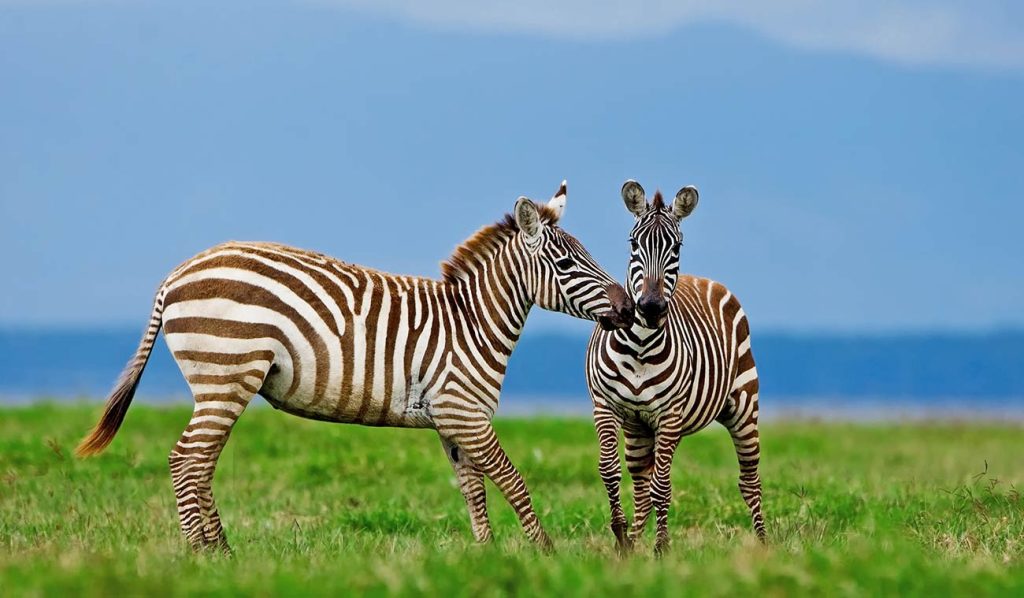
The crater floor holds roughly 25,000 large animals in 260 square kilometres, one of the densest concentrations anywhere in Africa. Because the walls are steep, much of that population stays year-round rather than migrating.
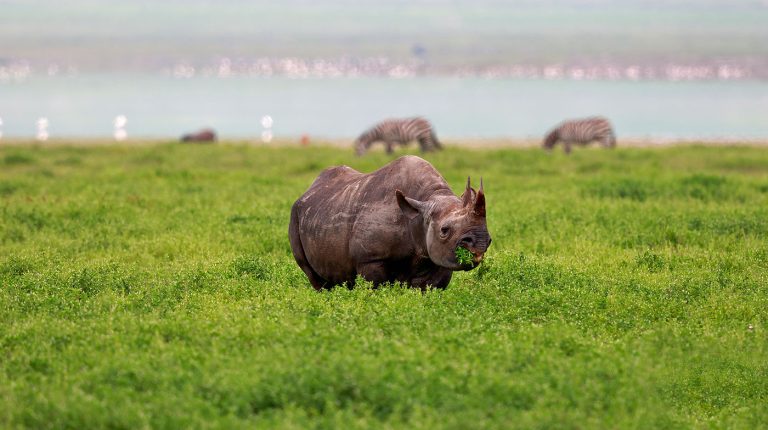
It is among the most reliable places on the continent to see black rhino, and the crater’s lions are unusually easy to find. Elephant bulls with exceptional tusks favour the Lerai fever tree forest, and buffalo, wildebeest, zebra and eland cover the grassland. Beyond the crater, Empakaai and Olmoti offer quieter walking country.
Lake Magadi on the crater floor draws lesser flamingo in numbers that rise and fall with the water, and the surrounding grassland and highland forest push the area’s list well past 500 species.
Kori bustard, crowned crane, ostrich and a strong range of raptors are all regular. Empakaai crater lake is the better flamingo site when Magadi is low.
By Car
Ngorongoro lies about 180 kilometres west of Arusha, a drive of three to four hours on good road as far as Lodoare gate. It sits directly on the route between Lake Manyara and the Serengeti, so almost every northern circuit itinerary passes through.
By Air
Light aircraft serve Lake Manyara and the Serengeti airstrips, with a road transfer on to the crater rim. A 4×4 is compulsory for the descent, and only authorised vehicles may go down.
Exploring the wildlife and attractions of this East African gem offers a once-in-a-lifetime experience filled with breathtaking landscapes, diverse ecosystems, and unforgettable encounters with nature.
No results available
The conservation area spans an enormous altitude range, from around 1,020 metres on the western plains to 3,648 metres at Loolmalasin, and conditions vary accordingly. On the crater rim at 2,200 to 2,400 metres, days reach 20°C to 24°C and nights fall to 8°C or below.
That altitude makes Ngorongoro the coldest place on the northern circuit by a clear margin. Morning mist on the rim is a near-daily feature and often does not lift until mid-morning, though it frequently sits above a clear crater floor.
The long rains run March to May, with April the wettest at around 180 millimetres, and short rains fall through November and December. Annual rainfall on the rim is roughly 1,000 millimetres, considerably more than the Serengeti plains to the west.
Warm clothing matters more here than anywhere else in northern Tanzania. Visitors who pack only for the tropics regularly find themselves genuinely cold at dawn and at dinner, so bring a fleece, a windproof and long trousers.
Ngorongoro works in every month, which sets it apart from most of the circuit. The crater walls hold game year-round, so there is no season when the floor empties.
June to October is dry, clear and cold at night, with the easiest driving and most reliable descent roads. It is peak season, so expect significant vehicle numbers on the floor through the middle of the day.
December to March is green and coincides with wildebeest calving on the adjoining Ndutu plains, arguably the finest time to be in the wider conservation area. Predator activity around the calving herds is intense.
April and May bring heavy rain and persistent rim mist, and descent roads become slippery, though rates fall sharply.
Whatever the month, descend early. Floor time is capped at six hours, and the first vehicles down get a quiet hour before the main flow arrives.
Whatever the month, descend into the crater early. Floor time is capped at six hours, the gate opens at dawn, and the first vehicles down get a quiet hour before the main flow arrives, which is when predators are most active.
Descent and ascent roads are steep, one-way and slippery when wet, and only permitted vehicles with authorised drivers may use them. Crater floor time is capped at six hours, which is enforced.
The usual wildlife rules apply, with the addition that baboons at the Ngoitokitok picnic site are notoriously bold. Keep vehicle windows shut and never carry food in the open. Altitude on the rim can leave visitors short of breath on the first day.
Twenty-five thousand animals inside a collapsed caldera, seen in a morning.
One of Africa's most dependable places to see black rhino.
Where the Leakeys traced two million years of human ancestry.
A steep descent to a flamingo-covered soda lake, on foot.
Gentle highland walking to a waterfall above the Munge stream.
Herding communities living inside the conservation area itself.
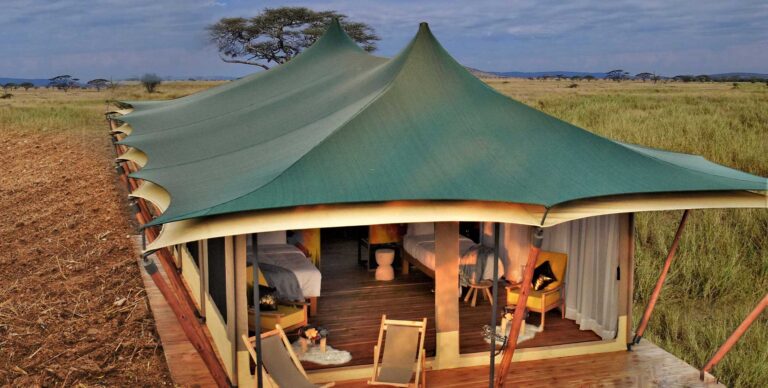
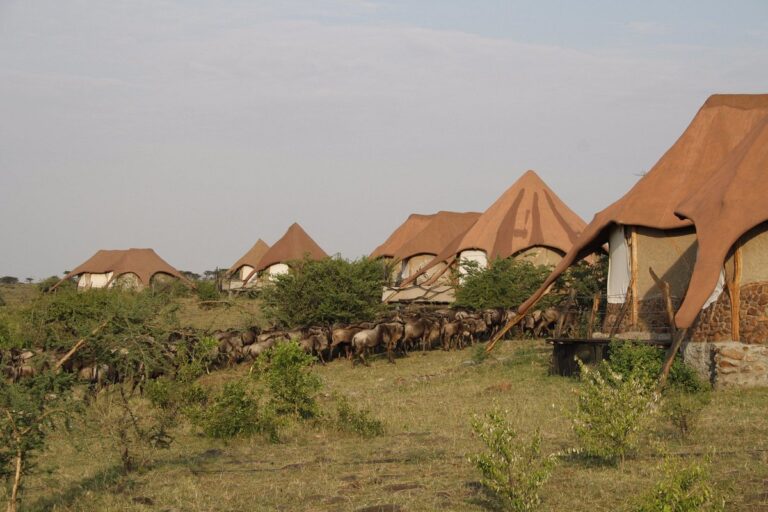
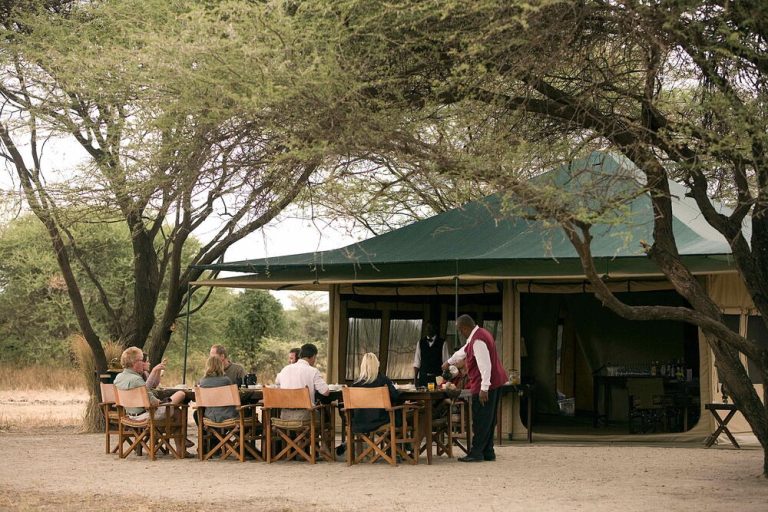
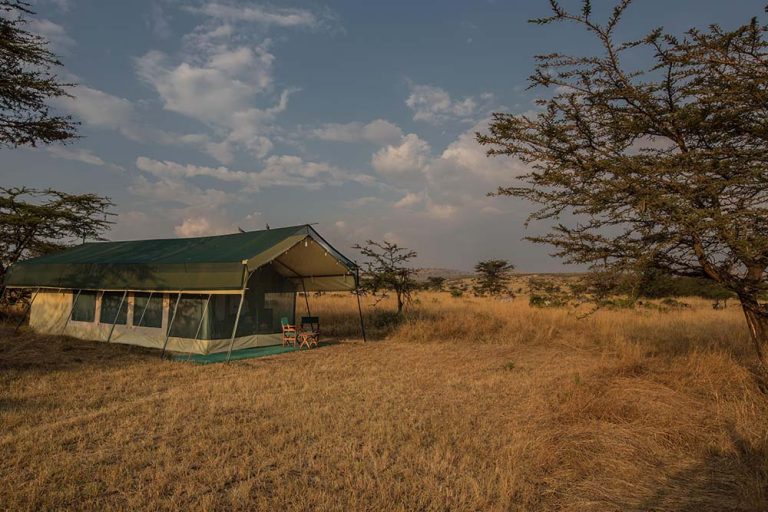
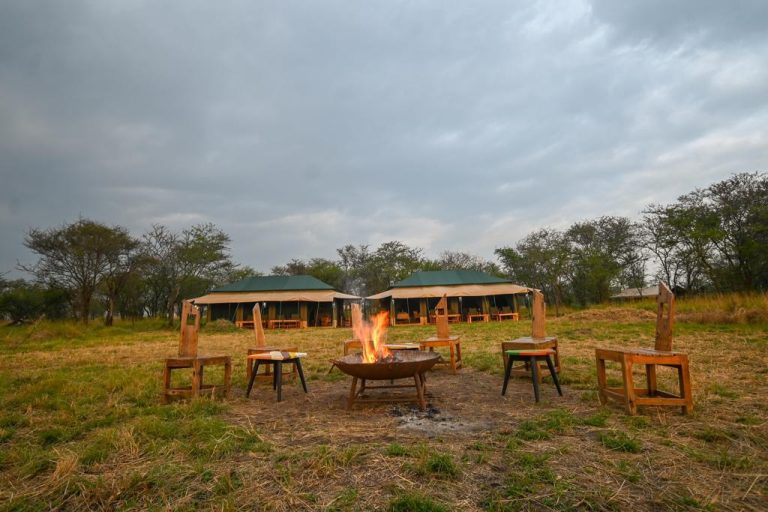
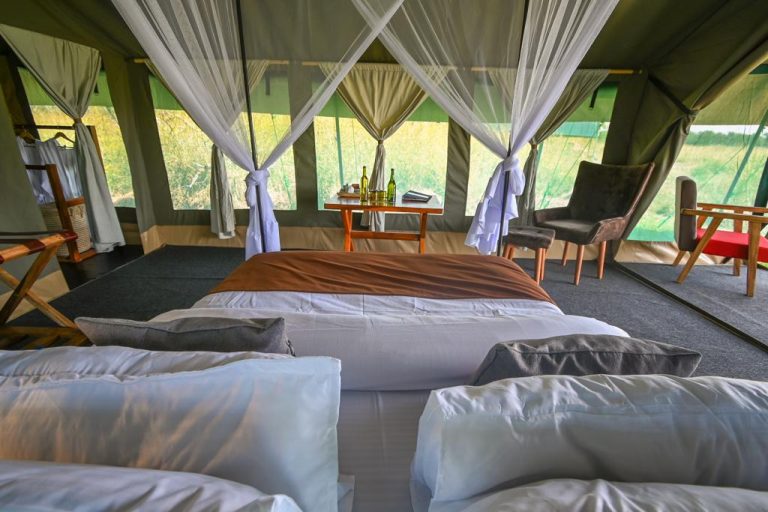
Explore a range of accommodation options designed to suit various preferences and budgets at this location. From comfortable lodges and tented camps to modern hotels, the area provides convenient access to nearby attractions and activities. Scroll through the carousel to find detailed listings of each property, including amenities and contact information, making it easy to plan your stay.
No results available
Explore Ngorongoro Conservation Area with these recommended tours
No results available
The crater is a collapsed caldera roughly 260 square kilometres across with walls some 600 metres high, and those walls act as a natural enclosure. Permanent water, year-round grazing and a mild highland climate mean most animals never need to leave, so around 25,000 large mammals stay resident rather than migrating. That density is why a single morning drive can produce sightings that take days elsewhere on the circuit.
It is among the most reliable places in East Africa to see black rhino, though sightings are usually distant across the central grassland rather than close up. The crater population is small, closely monitored and heavily protected, and rangers track individual animals daily. Bring binoculars and set expectations accordingly, because a rhino here is more often a grey shape on open grass than a photographic subject. Rangers track individual animals daily and can often say where they were last seen that morning.
Yes, and it is what makes Ngorongoro distinct from a national park. Around 100,000 Maasai live within the area under a multiple-use arrangement dating from 1959, grazing cattle across the highlands alongside wild herds. Permanent settlement on the crater floor is not allowed, but you will regularly see herders and livestock on the rim and across the surrounding plains as you drive through. Vehicles share the rim road with cattle throughout the day, and the arrangement remains a live subject of debate in Tanzania.
Any month works, which is unusual on the northern circuit, because the crater population does not migrate. June to October is dry and clear with the easiest driving, though nights on the rim are genuinely cold. December to March is green and coincides with wildebeest calving on the neighbouring Ndutu plains, which many consider the finest time to be in the wider area. April and May bring heavy rain and persistent rim mist, though rates fall sharply and the crater floor is far quieter.
It is a steep-sided ravine on the eastern plains of the conservation area where Louis and Mary Leakey conducted excavations from the 1930s onward, uncovering hominin remains and stone tools spanning nearly two million years. The site transformed understanding of human evolution and is often called the cradle of mankind. A small museum on site explains the finds, and it makes a natural stop on the drive toward the Serengeti.
One full day covers the crater floor comfortably, given the six-hour limit on descent. Two nights allows a second day for Empakaai or Olmoti crater walks, Olduvai Gorge and a Maasai village visit, which is a far more rounded experience of the conservation area than the crater alone. Most northern circuit itineraries allow one night, which is workable but rushed. Most northern circuit itineraries allow a single night, which is workable but leaves no room for Empakaai, Olduvai or a village visit.
Not on the crater floor, where walking is prohibited, but yes elsewhere. The Empakaai crater descent to its flamingo-covered soda lake is a steep and rewarding walk, and Olmoti offers gentler highland walking to a waterfall above the Munge stream. Both require a ranger, arranged at Ngorongoro headquarters or through your lodge, and both are far quieter than the main crater. Both walks require a ranger, arranged at Ngorongoro headquarters or through your lodge, and both are far quieter than the main crater.
Colder than most visitors expect for Tanzania. The rim sits at 2,200 to 2,400 metres, where daytime temperatures reach only 20°C to 24°C and nights fall to 8°C or below, particularly from June to August. Morning mist and wind add to it. A fleece, a windproof layer and long trousers are genuinely necessary, alongside sun protection for the crater floor itself. Chest complaints are common among visitors who packed only for the tropics and spend a cold night on the rim.
Explore other optional accommodation to consider at