Uganda
370 sq km
27 'C
30mm
12 Year
Lake Mburo National Park is the smallest savanna park in Uganda, covering 370 square kilometres of acacia woodland, open grassland and a chain of five lakes a few hours west of Kampala.
What it lacks in size it makes good in access and in freedom. Because there are no elephant and very few lion, walking safaris, horseback rides and night game drives all run routinely here, none of which are permitted in Uganda’s larger parks.
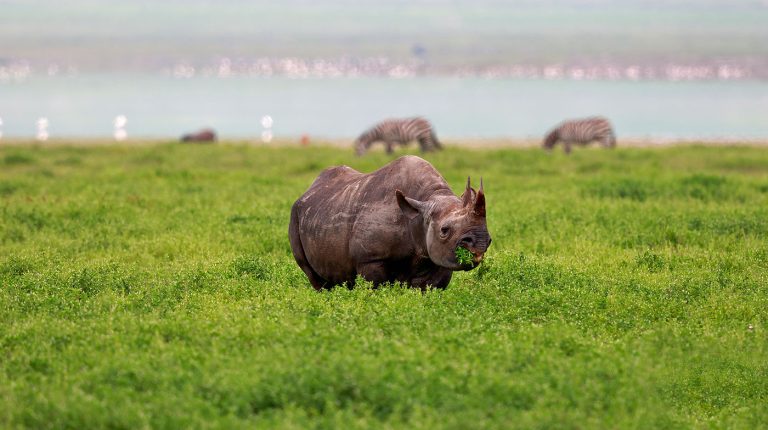
It is the only Ugandan park with impala, and holds the country’s largest zebra population, alongside eland, topi, waterbuck, bushbuck, oribi and warthog. Hippo and crocodile occupy the lakes, and the papyrus fringes occasionally produce shoebill.
Its position directly on the main road to Bwindi and Queen Elizabeth makes it the natural first or last night of a south-western circuit, breaking what would otherwise be a punishing nine-hour drive from Kampala into two comfortable legs.
The Banyankole live throughout this region, and their long-horned Ankole cattle are as much a part of the landscape as the wildlife, with the breed’s enormous curved horns making it instantly recognisable across East Africa.
Grazing pressure along the park boundary has been a persistent source of tension since gazetting, and the park’s boundaries have been redrawn more than once in response. Cattle and wildlife still share range along the margins, and understanding that history gives useful context to a visit.
The Igongo Cultural Centre on the Mbarara road is the best introduction to Ankole history and to the traditions of the kingdom that once dominated this region, with a well-presented museum covering pastoralism, royal history and daily life.
Community walks from the park’s eastern edge take in cattle keeping, milk processing and local homesteads, and several are run directly by families living alongside the boundary, so the fees reach them without intermediaries.
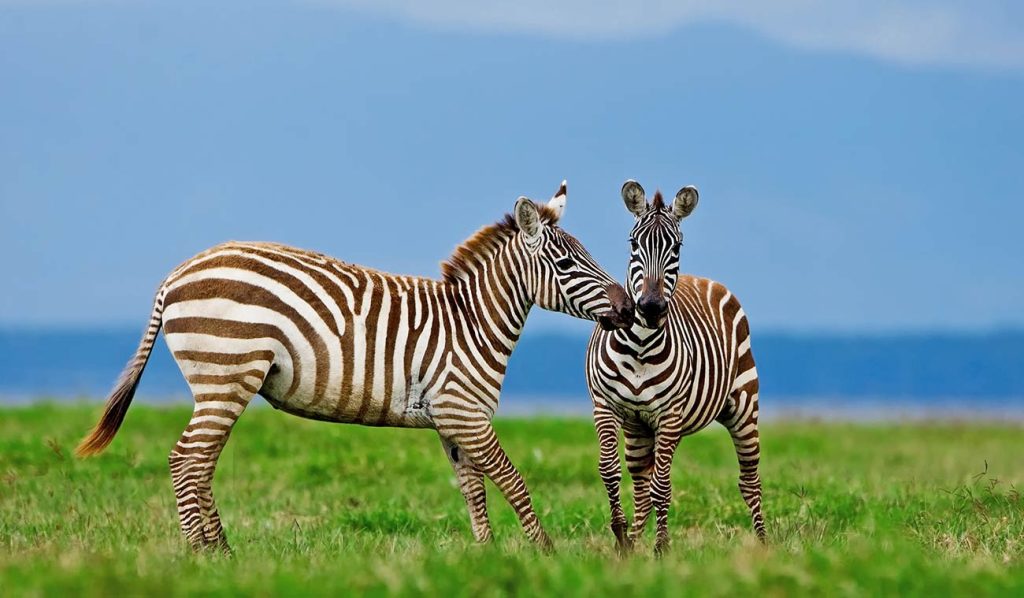
Lake Mburo is the smallest savanna park in Uganda and works as a change of pace rather than a Big Five destination. It is the only Ugandan park with impala, and holds the country’s largest zebra population.
Eland, topi, waterbuck, warthog, bushbuck and oribi are all common in the acacia woodland, and hippo and crocodile occupy the lakes. There are no elephant, and lion have only recently begun returning after a long absence. Leopard and hyena are present but nocturnal and rarely seen.
Around 350 species have been recorded across woodland, wetland and lake, making the park a rewarding stop for birders travelling between Kampala and the south-west.
The papyrus fringes of Lake Mburo hold shoebill on occasion, along with papyrus gonolek and African finfoot. Fish eagle, bare-faced go-away-bird and red-faced barbet, a regional speciality, are all regular.
By Car
The park lies about 240 kilometres from Kampala, a drive of three and a half to four hours on surfaced road, with gates at Nshara and Sanga. Its position on the main route to Bwindi and Queen Elizabeth makes it a natural first or last night.
By Air
There is no scheduled air service. Charters can land at Mbarara, but almost everyone arrives by road given how straightforward the drive is.
Exploring the wildlife and attractions of this East African gem offers a once-in-a-lifetime experience filled with breathtaking landscapes, diverse ecosystems, and unforgettable encounters with nature.
No results available
At around 1,200 to 1,800 metres the park is warm rather than hot, with days between 26°C and 29°C and nights around 14°C to 16°C. That moderation is one reason walking safaris are comfortable here in a way they would not be in a lowland park.
Two wet seasons, March to May and September to November, are separated by drier spells in June to August and December to February. Annual rainfall is around 800 millimetres, lower than much of Uganda, which is why the vegetation is acacia savanna rather than forest.
Rain typically arrives as heavy afternoon storms rather than sustained drizzle, and the park drains reasonably well. Because it is small with a good road network, wet-season visits remain straightforward in a way that is not true of Bwindi or Ishasha.
Tsetse fly are common in parts of the woodland. Long sleeves and trousers in neutral colours help considerably; avoid black and dark blue, which attract them.
Pack a light fleece for early morning drives and a waterproof outside the dry months.
Lake Mburo is among the least seasonal parks in Uganda, which is part of its usefulness as a staging point on a longer circuit.
June to August and December to February are the drier periods and the best for game viewing, when animals concentrate near the lakes and the ground stays firm underfoot for walking and horseback safaris. Visibility through the acacia is also better once the grass drops back.
March to May and September to November bring the rains, greener country and the strongest birding as migrants arrive. The park is small enough and the roads good enough that wet-season visits remain entirely practical.
April is the wettest month, when afternoon storms are most likely to interrupt an activity.
Whichever season you choose, book a night drive. Leopard, hyena and bushbaby are active year-round and almost never seen during daylight.
The park’s small size works in its favour whatever the season. Nothing is more than an hour from anything else, so a rained-off afternoon costs you very little and activities can usually be rescheduled the same day.
The absence of elephant and the scarcity of lion are precisely why walking and horseback safaris are permitted here, but a ranger still accompanies every walk and their instructions should be followed exactly.
Hippo come ashore at night around the lakes and are the main hazard; do not walk between bandas and the water after dark. Buffalo are present and unpredictable. Tsetse fly are common in parts of the woodland.
Hippo, crocodile and papyrus birdlife from the water.
Permitted here because there are no elephant and few lion.
Ride among zebra and eland, which tolerate horses closely.
Uganda's largest zebra population and its only impala.
Leopard, hyena, bushbaby and porcupine on a guided after-dark drive.
A small closed-canopy forest, good for birders with a permit.
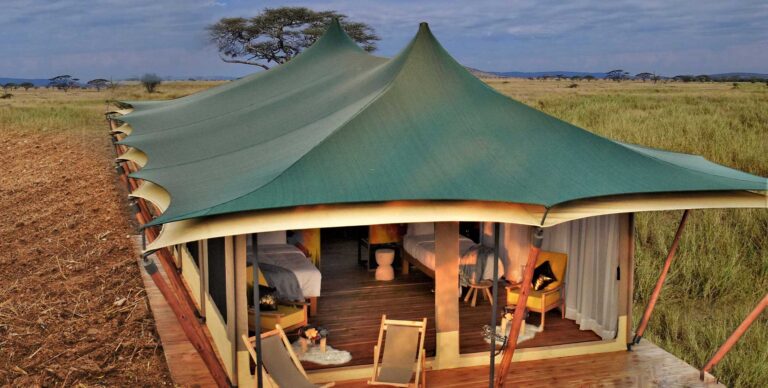
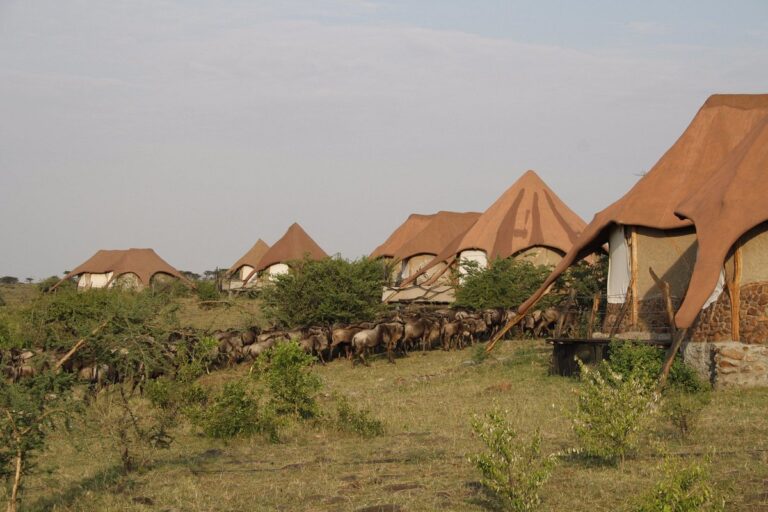
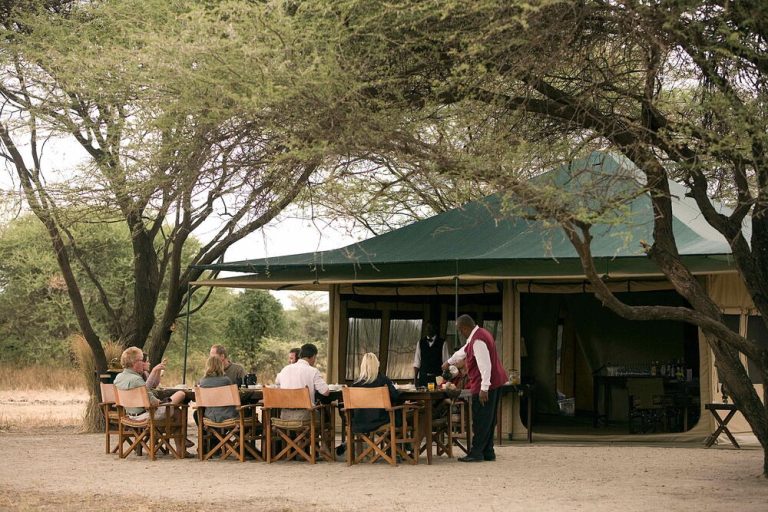
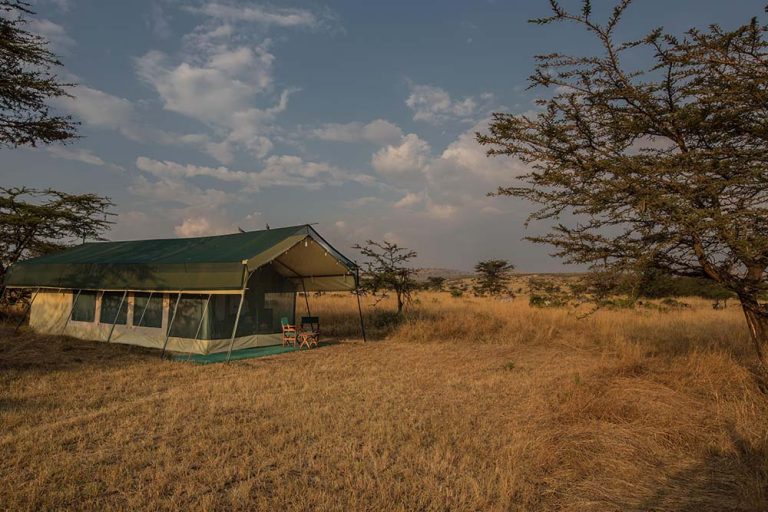
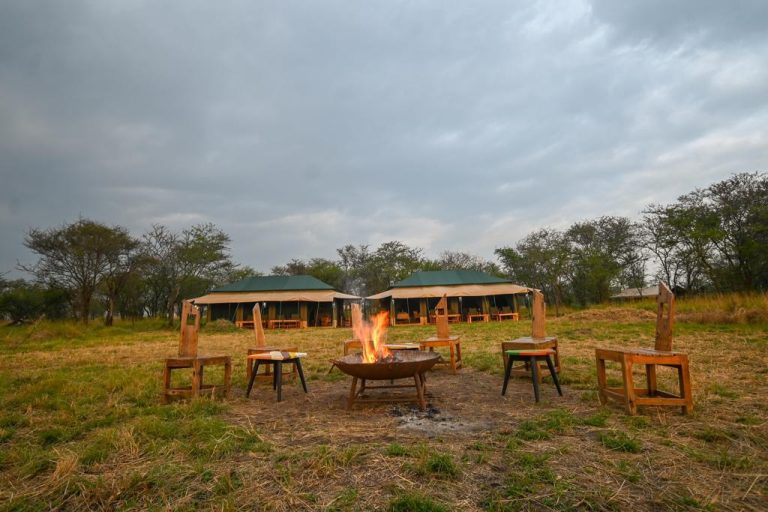
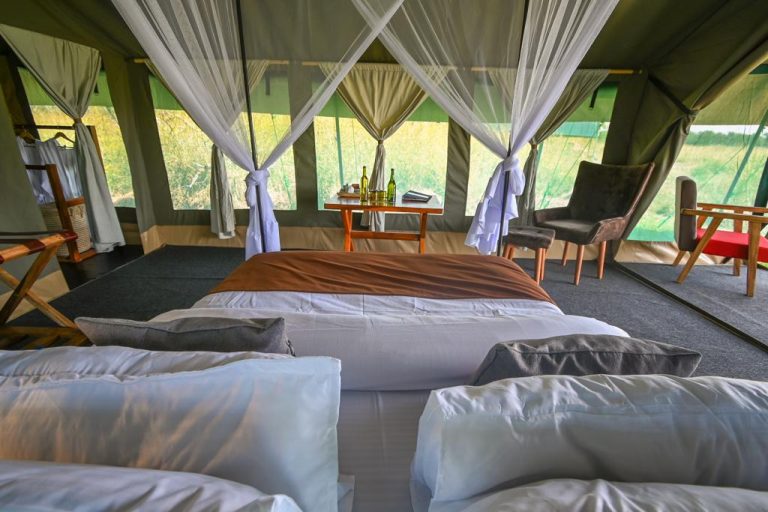
Explore a range of accommodation options designed to suit various preferences and budgets at this location. From comfortable lodges and tented camps to modern hotels, the area provides convenient access to nearby attractions and activities. Scroll through the carousel to find detailed listings of each property, including amenities and contact information, making it easy to plan your stay.
No results available
Explore Lake Mburu National Park with these recommended tours
No results available
Its size and its absences. At 370 square kilometres it is the smallest savanna park in the country, and because there are no elephant and very few lion, activities forbidden elsewhere become possible: walking safaris, horseback rides and night drives all run routinely. It is also the only Ugandan park with impala and holds the largest zebra population, so the game list differs noticeably from the bigger parks. Its proximity to Kampala means it can be visited over a single weekend.
It is the natural first or last night on a south-western circuit, sitting about three and a half hours from Kampala directly on the road to Bwindi and Queen Elizabeth. Breaking a nine-hour drive here rather than pushing through makes the journey far more pleasant, and one night is enough for a boat trip and a walk or ride before continuing. It also breaks the altitude gain, arriving at Bwindi’s cooler heights after a gentler night.
Yes, and it is the park’s main appeal. Guided walks with an armed ranger operate from several points, and horseback safaris run from Mihingo Lodge, where zebra and eland tolerate horses at close quarters in a way they never tolerate vehicles, because they read a horse as another grazer rather than a threat. Hippo remain the principal hazard, particularly after dark, and buffalo are unpredictable, so ranger instructions are followed strictly.
June to August and December to February are the drier windows and the best for game viewing, with animals concentrated near the lakes and firm ground underfoot for walking. The wet seasons of March to May and September to November bring greener country and the strongest birding as migrants arrive. The park is small and its roads good, so wet-season visits stay straightforward, which is not true of most other Ugandan parks.
Zebra in large numbers, impala found nowhere else in Uganda, plus eland, topi, waterbuck, bushbuck, oribi, warthog and buffalo. Hippo and crocodile occupy the lakes. There are no elephant at all, and lion have only recently begun returning after a long absence, so predator sightings are uncommon. Leopard and hyena are present but nocturnal, which is exactly why the night drive is worth booking as part of any stay. Leopard and hyena are present but nocturnal, which is exactly why the night drive is worth booking as part of any stay.
Yes, and it is the best way to see the park’s aquatic life. The two-hour cruise brings you close to hippo pods, crocodile basking on the banks, and a strong range of waterbirds including African finfoot and, with luck, shoebill in the papyrus fringes. Trips run morning and afternoon and are booked at the jetty or through your lodge. Afternoon departures generally give better light for photography. Trips run morning and afternoon and are booked at the jetty or through your lodge, with afternoon departures giving better light.
The park lies about 240 kilometres from Kampala, a drive of three and a half to four hours on surfaced road, with gates at Nshara and Sanga. There is no scheduled air service, and charters can only land at Mbarara, so almost everyone arrives by road. That is no hardship given how straightforward the drive is, and the position on the main south-western route is what makes the park so easy to include.
One night suits most itineraries, and is enough for a boat trip plus either a walk or a horseback ride. Two nights allows all three activities plus a night drive and the Rubanga forest walk, and turns the park into a destination rather than a staging post. Given how few Ugandan parks permit walking and riding, a second night here is better value than many visitors expect. Given how few Ugandan parks permit walking and riding, a second night here is better value than many visitors expect.
Explore other optional accommodation to consider at